
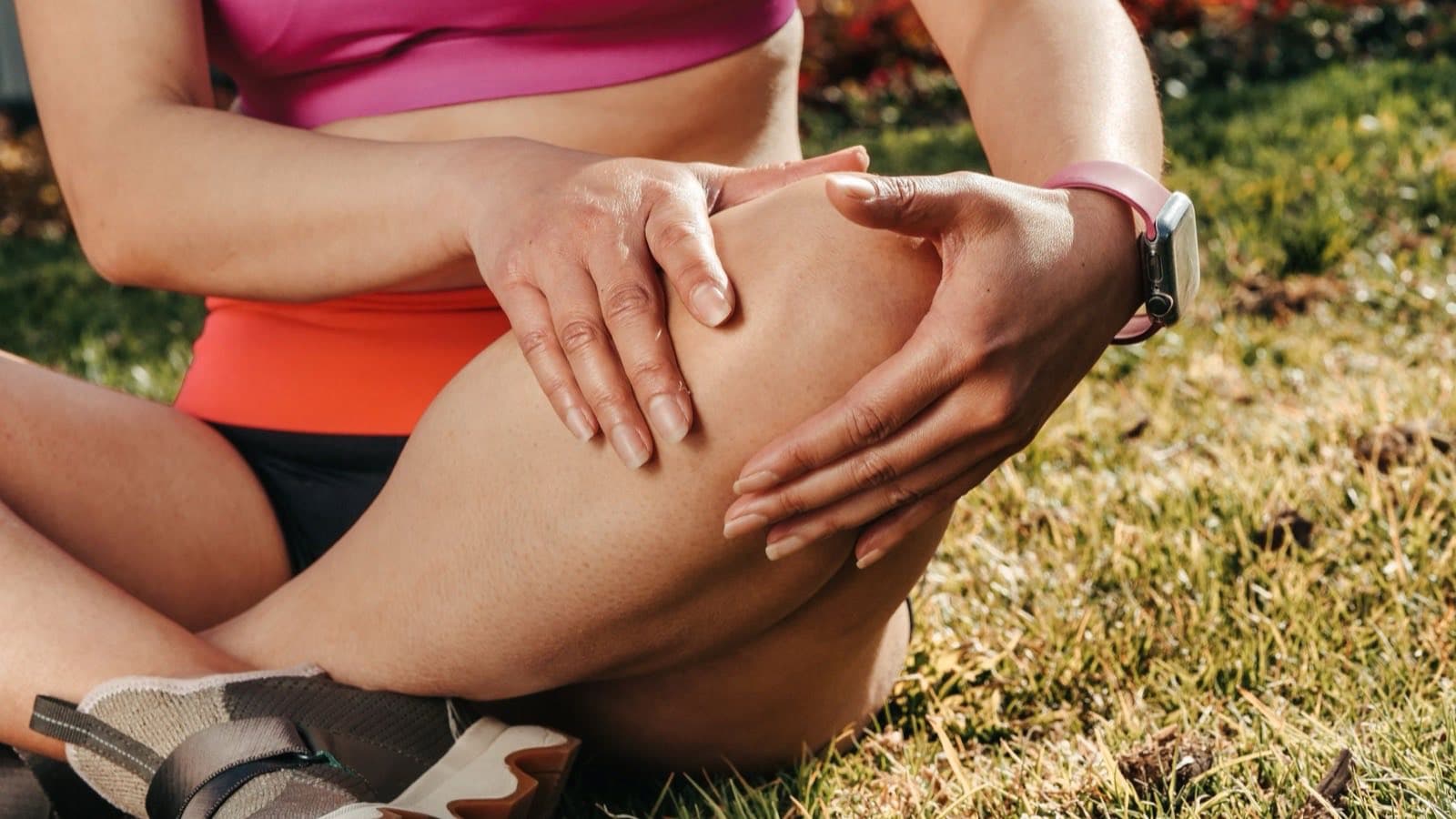
Runner's knee, or patellofemoral pain syndrome, is pain around or behind the kneecap that gets worse with stairs, squatting and sitting for long periods. It usually comes from load increasing faster than the knee can adapt, and it does not need surgery. The treatment with the strongest evidence is an exercise programme targeting the hip and thigh muscles, combined with sensible load management.
What are the symptoms?
- A dull, diffuse ache around or behind the kneecap
- Worse going downstairs, running downhill and squatting
- Pain when standing up after sitting with bent knees for a while (the "cinema sign")
- Sometimes clicking or grinding under the kneecap; without pain, this alone is not a concern
- Marked swelling, locking and giving way are usually absent
That last point matters: swelling, locking or the knee giving way suggest a meniscus or ligament injury, which needs a different assessment.
What causes it?
The joint between the kneecap and the thigh bone takes high loads during squats and stairs. Pain usually starts when that load exceeds what the tissues can currently handle:
- Increasing weekly mileage or pace too quickly
- Suddenly adding hill or stair sessions
- Weak hip muscles, letting the knee drift inwards while running
- Insufficient strength in the front thigh muscle (quadriceps)
- Poor sleep, stress and too little recovery
Shoes or running surface are rarely the main cause on their own.
Don't let the name mislead you: runner's knee is not limited to runners. It also appears in basketball and volleyball players, people taking up a new sport, and anyone whose job involves frequent squatting or stairs. The treatment logic is the same for all of them: adjust the load for a while and build the knee's capacity step by step.
The physiotherapy pathway
Step 1: adjust the load
Complete rest is rarely needed. The goal is to stay active at a level your knee tolerates. A practical rule:
| Pain during exercise (0–10) | Next morning | Decision |
|---|---|---|
| 0–3 | No increase | Continue, you can progress gradually |
| 4–5 | Slight increase, settles during the day | Stay at the same level |
| 6 or more | Clear increase | Reduce distance or intensity |
Step 2: hip and knee strengthening (weeks 0–6)
- Side-lying leg raises, bridges, side planks — for the hip muscles
- Wall sits in a shallow range, leg press in a pain-free range
- Step-ups, then controlled step-downs
- Single-leg squats in front of a mirror, keeping the knee from caving in
Combining hip and knee exercises gives better results than knee exercises alone.
Step 3: control and power (weeks 6–12)
- Deeper single-leg squats and lunges
- Light hopping and landing drills
- Taping to support the kneecap if needed — it makes exercise easier to do pain-free but does not replace it
Most people see clear improvement with 6–12 weeks of consistent work. For some, it takes longer.
Returning to running
- Start with short runs once daily walking, stairs and 20 single-leg squats are pain-free
- Build up with walk-run intervals on flat ground
- Increase weekly distance in small steps rather than big jumps
- Slightly increasing your step rate and shortening your stride can reduce load on the knee
- Add downhill running and stair sessions last
For post-run stretching, see our article on stretches you can do at home.
When should you see a doctor?
Get a medical assessment if you have:
- Pain that started after a fall, a direct blow or a sudden twist
- Marked swelling, locking or the knee giving way
- Inability to fully straighten or fully bend the knee
- Knee pain with redness, warmth and fever
- Pain that persists at night and at rest and keeps getting worse
- No change at all after 3 months of consistent exercise
Frequently asked questions
Do I have to stop running completely? Usually not. Adjusting distance and intensity by the pain rules works better than stopping altogether.
Should I wear a knee brace? It may give short-term relief. It does not build strength, so it is not a solution on its own.
Is my cartilage wearing out? Patellofemoral pain syndrome does not mean cartilage wear. It is usually a load-related, reversible problem.
Will squats damage my knee? Not when the dose is right; squats are one of the core rehab exercises. They start shallow and pain-free and get deeper as strength improves.
When can I race again? Once you have completed several weeks of your running plan within the pain rules, and downhill running no longer hurts. The timing varies from person to person; how your knee responds matters more than the calendar.
This article is for general information and does not replace an examination. If pain around your kneecap is limiting your running, you can book an assessment at our clinic in Muratpaşa, Antalya.