
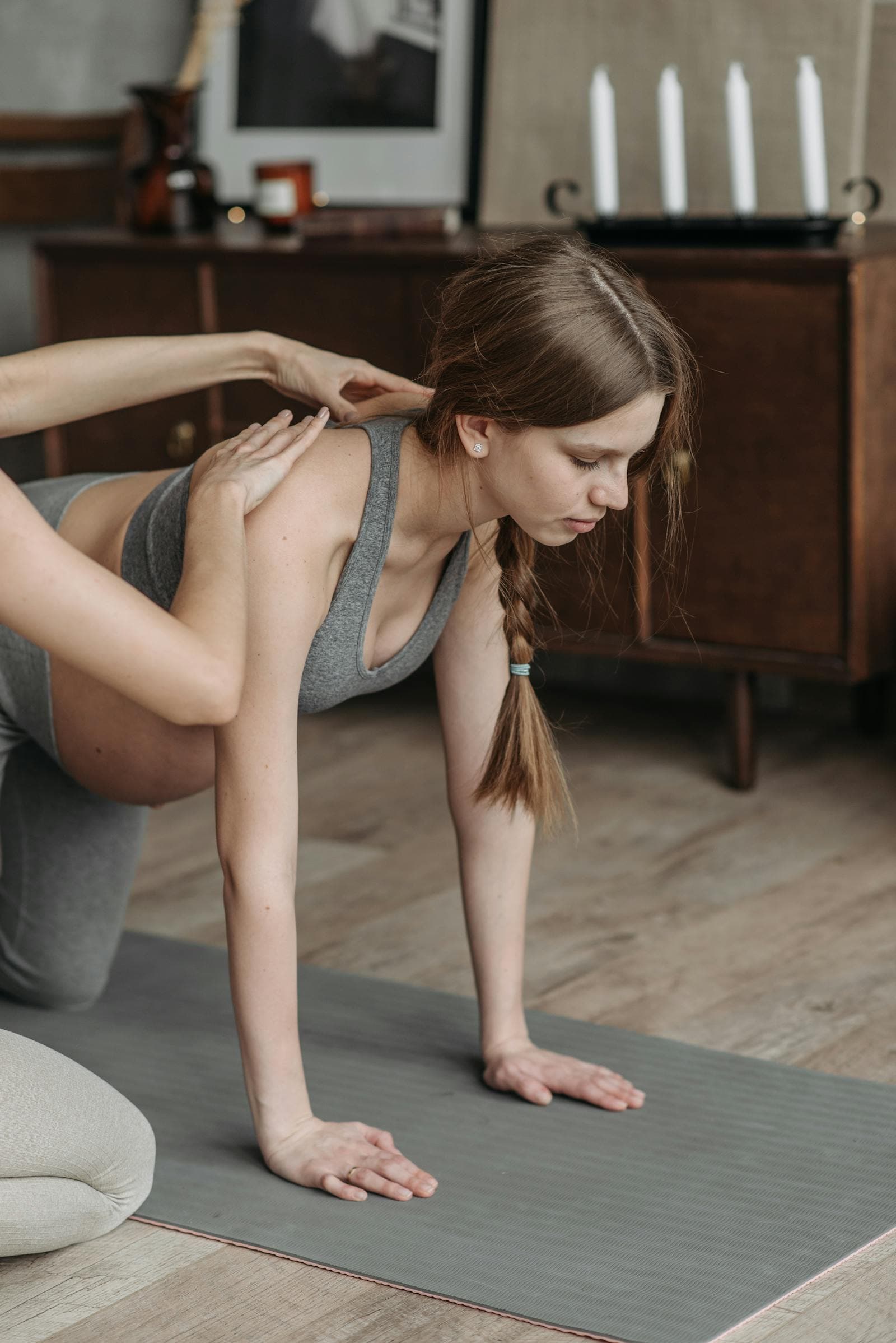
Back and pelvic pain affects more than half of pregnant women. Being common does not make it normal or unavoidable — appropriate exercise and daily adjustments reduce it considerably.
Why the pain happens
- Relaxin: The hormone loosens ligaments, increasing mobility at the pelvic joints and reducing stability.
- Centre of gravity shifting forward: The lumbar curve deepens and the back muscles work continuously.
- Abdominal muscles lengthening: Trunk support weakens and load transfers to the back and pelvis.
- Weight gain: More load through knees, hips and ankles.
Two different problems
Low back pain: In the middle and upper part of the lower back, worse with sitting, sometimes easier lying on your back.
Pelvic girdle pain: In the groin, tailbone or back of the hip. Standing on one leg, turning over in bed, climbing stairs and getting out of a car become markedly difficult. Physiotherapy approaches it differently from back pain.
The distinction matters: in pelvic girdle pain, separating the legs widely provokes symptoms, so movement strategies are changed — for instance swinging both legs together when getting out of a car.
By trimester
First trimester (0–13 weeks)
- Exercise can continue; those already active keep their programme
- Beginners start with walking and light strength work
- Pelvic floor awareness is learned now — starting early pays off later
- Intensity can be reduced for nausea and fatigue
Second trimester (14–27 weeks)
- Usually the most comfortable phase and the most productive for exercise
- Prolonged positions lying flat on the back are avoided — the growing uterus can compress the major vein
- Trunk stabilisation, hip strengthening, side plank variations
- Swimming and water-based exercise are excellent, as they unload the joints
Third trimester (28+ weeks)
- Balance changes; watch for falls
- Pelvic floor and breathing coordination come to the front
- Birth positions and breathing techniques are practised
- Keep moving; complete inactivity makes postnatal recovery harder
How to do pelvic floor exercise properly
The pelvic floor muscles are the ones you contract to hold urine or stop wind escaping.
Technique: In a comfortable position, draw the muscles up and in as if holding on. Do not tighten the abdomen, buttocks or legs. Hold five seconds, release fully for ten. Ten repetitions, three times a day.
Common mistakes:
- Holding your breath — breathing should continue
- Squeezing the buttocks
- Not allowing enough time to release — relaxation matters as much as contraction
Some women cannot relax the pelvic floor, and an overactive muscle can itself cause pain and difficulty in labour. This is why "everyone should do Kegels" is not sound advice without assessment.
Eight practical suggestions
- Sleep on your side with a pillow between your knees and under your bump
- Getting out of bed: roll to your side first, then push up with your arms
- Getting out of a car: swing both legs round together
- Take stairs slowly, one step at a time
- Balance shopping between both hands
- Sit down to dress rather than standing on one leg
- Avoid long periods standing; if unavoidable, share weight evenly
- Change heels for supportive footwear
When to stop exercising
Stop and contact your doctor if you have:
- Vaginal bleeding
- Regular painful contractions
- Fluid leakage
- Breathlessness, dizziness, chest pain
- Calf pain and swelling
Frequently asked questions
Is physiotherapy safe in pregnancy? Yes. With assessment and exercise adapted to pregnancy, and coordination with your doctor in higher-risk pregnancies, it is delivered safely.
Can I have manual therapy? Yes, with appropriate techniques and positioning. Lying face down and high-velocity manipulation are not used.
Do pregnancy support belts help? In pelvic girdle pain they can give temporary support during activity. Continuous use is not advised as it reduces muscle work.
When can I exercise after birth? After an uncomplicated vaginal birth, breathing and gentle pelvic floor work can start early. Loaded exercise waits for the six-week check and an assessment. Recovery after a caesarean is more gradual.
This article is general information and does not replace medical care. For back or pelvic pain in pregnancy, book an appointment at our clinic in Muratpaşa, Antalya.