
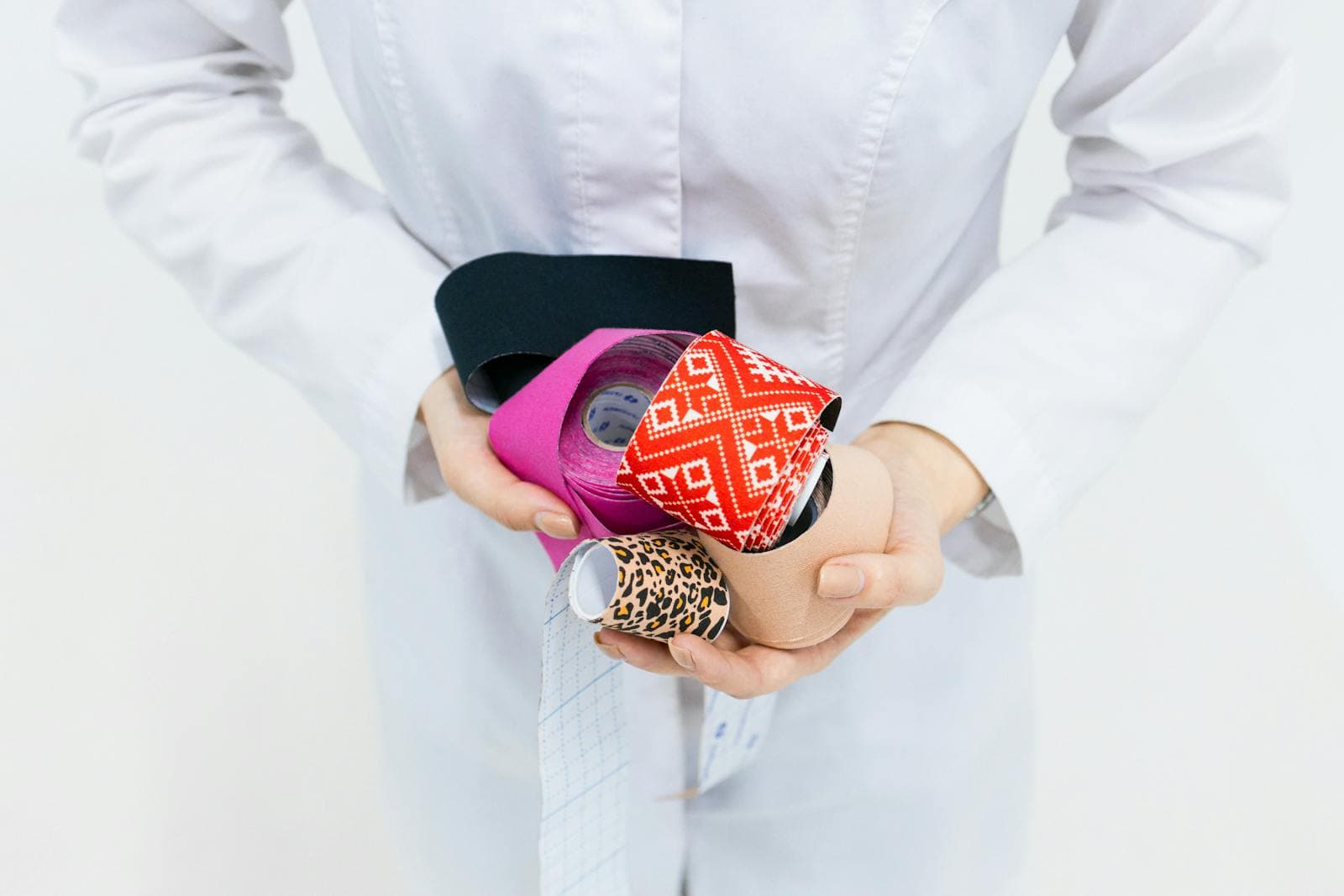
Kinesio taping uses elastic cotton tape applied to the skin. It attracts a lot of attention because it is so visible on athletes. This article separates what the method actually delivers from the claims the evidence does not support.
How the tape works
The tape's elasticity is close to that of human skin, and when applied under tension it lifts the skin slightly. The proposed mechanisms:
- Sensory feedback: Stimulating skin receptors increases awareness of movement
- Pain modulation: Constant tactile input can dampen the perception of pain signals (gate control theory)
- Psychological effect: Visible support gives confidence in movement — this should not be dismissed
What the evidence says
Areas with reasonable support:
- Short-term pain reduction, particularly alongside other treatments
- A limited increase in range of motion
- Greater confidence in movement and participation in activity
Claims without adequate support:
- That it increases muscle strength
- That it markedly accelerates lymphatic drainage
- That it improves performance measurably
- That it prevents injury
- That the colour of the tape changes the effect — it does not; colour is purely aesthetic
The honest summary: Kinesio taping is a useful adjunct. On its own it does not produce lasting change, and it does not replace exercise or hands-on treatment.
Where it is used
- Pain around the kneecap (patellofemoral pain)
- Shoulder impingement and scapular control work
- Tennis elbow during the painful phase
- After ankle sprain, during return to activity
- Neck and upper back tension, for postural awareness
- Swelling management, alongside other methods
Rules for correct application
Skin preparation: Clean, dry and oil-free. Tape will not hold on skin with lotion on it. Dense hair may need trimming.
The ends are not stretched: The first and last 2–3 cm of the tape go on with no tension. Stretching the ends is the most common cause of blistering and irritation.
Tension: Depends on the aim. Low tension (15–25%) for pain reduction, higher for support applications. Maximum tension is rarely needed.
Round the corners: Sharp corners catch on clothing and lift early.
Rub it after application: Friction from your hand generates heat and activates the adhesive.
Duration: It can stay on for 3–5 days. It is waterproof and you can shower. Remove it once the edges start lifting.
Removal: Peel parallel to the skin, in the direction of hair growth, slowly. Pulling it off quickly at a right angle irritates the skin. Wetting it in the shower makes removal easier.
Who should not have it
- Anyone allergic to the adhesive
- Areas with open wounds, infection or active skin disease
- Suspected deep vein thrombosis
- Active cancer in the area
- Skin with sensory loss in uncontrolled diabetes
- Very thin, fragile skin (older age, long-term corticosteroid use)
A small test strip can be left on for 24 hours before first use to check for a skin reaction.
Setting the expectation correctly
Many patients report immediate relief when tape is applied. That is a real effect, but:
- It largely disappears when the tape comes off
- The underlying weakness or movement problem is unchanged
- The tape is a tool for making the exercise programme possible
For that reason we do not offer taping as a treatment in its own right. It is used after assessment, as a support to the exercise programme.
Frequently asked questions
Can I apply it myself? Simple applications can be taught. But which structure to tape, in which direction and at what tension depends on assessment. Generic templates online may not match your problem.
How often should it be changed? Every 3–5 days, with at least 24 hours of rest for the skin in between to reduce irritation.
Is it banned in competition? No, it is permitted.
Why does it do nothing for some people? The response varies considerably between individuals. If three applications produce no benefit, it is better to focus on the other components of the programme than to persist.
Is there a rule for choosing the colour? No. The claim that colours have different physical effects is not supported; the choice is entirely yours.
This article is general information. For a treatment plan suited to your complaint, book an appointment at our clinic in Muratpaşa, Antalya.