
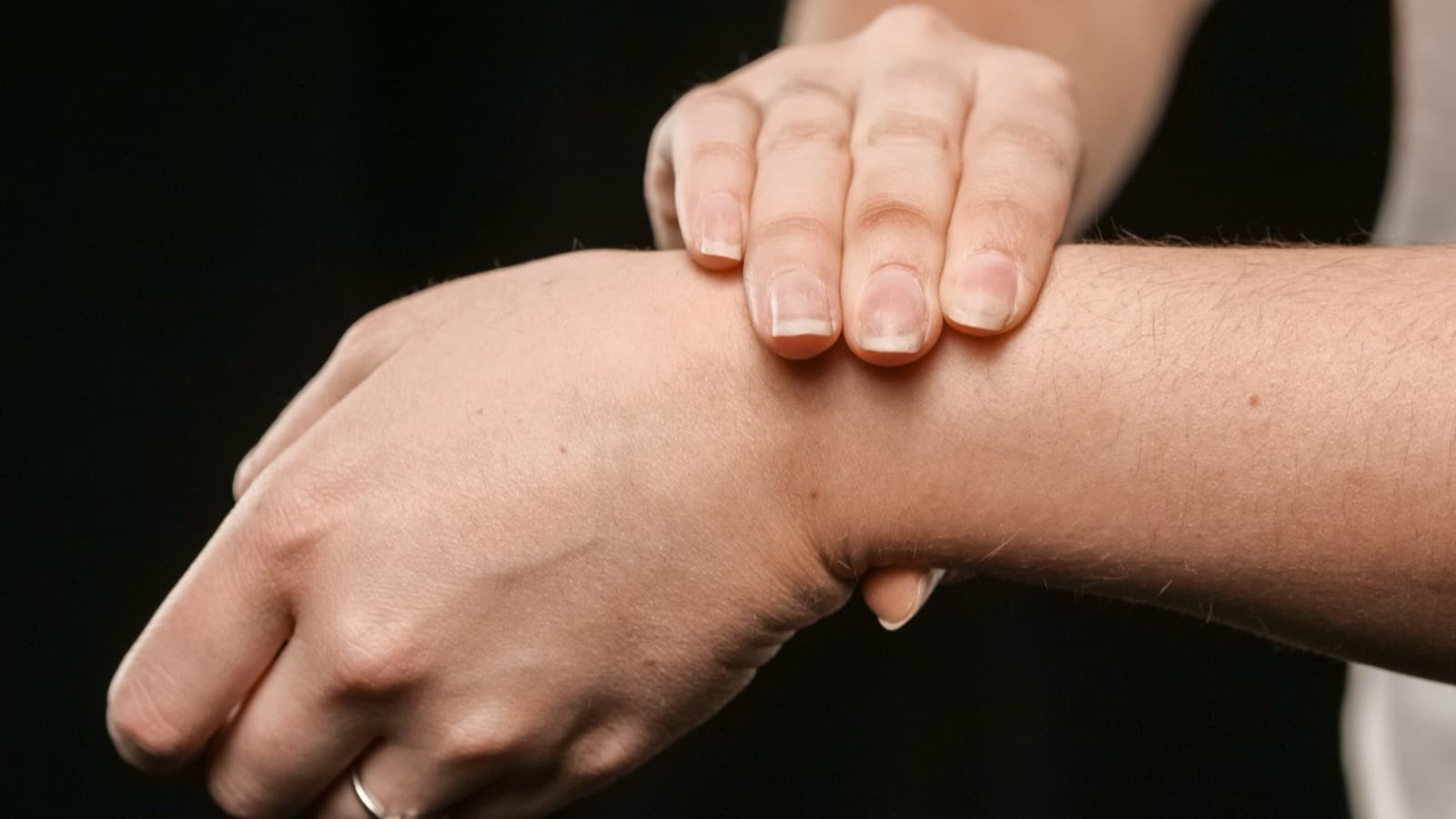
Carpal tunnel syndrome is compression of the median nerve as it passes through a narrow channel in the wrist, causing numbness and tingling in the thumb, index and middle fingers. In mild to moderate cases, a night splint, activity changes and physiotherapy are the first-line treatment. Constant numbness, weakness in the hand or wasting of the muscle at the base of the thumb mean you should see a doctor without delay.
What are the symptoms?
- Numbness or tingling in the thumb, index finger, middle finger and half of the ring finger
- Numbness that wakes you at night and eases when you shake your hand
- Worse during tasks that keep the wrist bent for long periods: holding a phone, driving, reading
- Later on, difficulty doing up buttons and dropping things
- Thinning of the muscle bulk at the base of the thumb
The little finger is usually spared. If the numbness includes the little finger, or spreads down the arm together with neck pain, the problem may lie with another nerve or in the neck. We explain arm symptoms that start in the neck in our cervical disc herniation article.
What causes it?
Anything that raises pressure inside the carpal tunnel loads the nerve:
- Holding the wrist bent forwards or backwards for long periods
- Repetitive gripping and vibrating tools
- Fluid retention during pregnancy — often settles after the birth
- Conditions such as diabetes, thyroid disorders and rheumatoid arthritis
- A previous wrist fracture
How is it diagnosed?
Diagnosis is mainly clinical: where the symptoms are, provocation tests at the wrist, and checks of sensation and muscle strength. Your doctor may request nerve conduction studies to see how much the nerve is affected. This matters most when there is muscle weakness or surgery is being considered.
What does physiotherapy do?
The aims are to take pressure off the nerve, protect the wrist and change day-to-day habits.
| Approach | Purpose |
|---|---|
| Night splint | Keeps the wrist neutral to reduce pressure while you sleep |
| Activity changes | Breaks up positions that hold the wrist bent for long periods |
| Nerve and tendon gliding exercises | Helps the nerve move freely within the tunnel |
| Manual therapy | Improves wrist and hand joint mobility and eases soft tissue |
| Neck and shoulder assessment | Rules out other compression points along the nerve |
| Education | Adjusts keyboard, mouse and phone use |
The research evidence for nerve gliding and manual therapy is limited, so they are used alongside a night splint and activity changes rather than on their own. The night splint is the step with the most consistent benefit.
Everyday habits that help
- Keep the wrist straight: Avoid letting it tilt upwards when you type or use a mouse.
- Take breaks: Every 30–45 minutes, relax your hands and open and close your fingers.
- Grip lighter: Do not hold tools tighter than you need to; choose thick-handled ones.
- Switch hands: Use earphones for long phone calls.
- Sleep position: Try not to sleep with your hand under your head or your wrist curled.
For general desk set-up principles, see our guide for office workers.
How long does recovery take?
In mild and moderate cases, noticeable relief is expected within 4–8 weeks of splinting and exercise. Pregnancy-related carpal tunnel usually eases on its own in the weeks to months after the birth. If symptoms persist after 6–12 weeks of consistent conservative treatment, your doctor will discuss injection or surgery.
When should you see a doctor?
You need a medical assessment, before or alongside physiotherapy, if you have:
- Numbness that is constant throughout the day
- Visible wasting of the muscle at the base of the thumb
- Frequently dropping things, or clear weakness with fine tasks
- Numbness progressing quickly in both hands
- Numbness and swelling that started right after a wrist injury
- Neck pain, unsteady walking, or numbness in the arms and legs at the same time
These signs may mean the nerve is significantly affected or that the problem comes from somewhere else.
Frequently asked questions
Should I wear the splint during the day too? Night use is usually enough. Wearing it for long periods in the day can weaken the hand; short use during tasks that trigger symptoms may be considered.
Can it get better without surgery? Many mild and moderate cases improve with conservative treatment. When there is muscle weakness or wasting, surgery is considered earlier.
Do I need physiotherapy after surgery? Once the wound has healed, some people benefit from work on movement, the scar and grip strength.
Does computer use cause carpal tunnel syndrome? How far keyboard and mouse use causes it on its own is debated. It can aggravate existing symptoms, though, so wrist position and breaks still matter.
What can I do during pregnancy? Night splints, positioning advice and gentle exercises are safe during pregnancy. Decisions about medication or injections are made by your doctor.
This article is for general information and does not replace an examination. If numbness in your hand wakes you at night, you can book an assessment at our clinic in Muratpaşa, Antalya.