
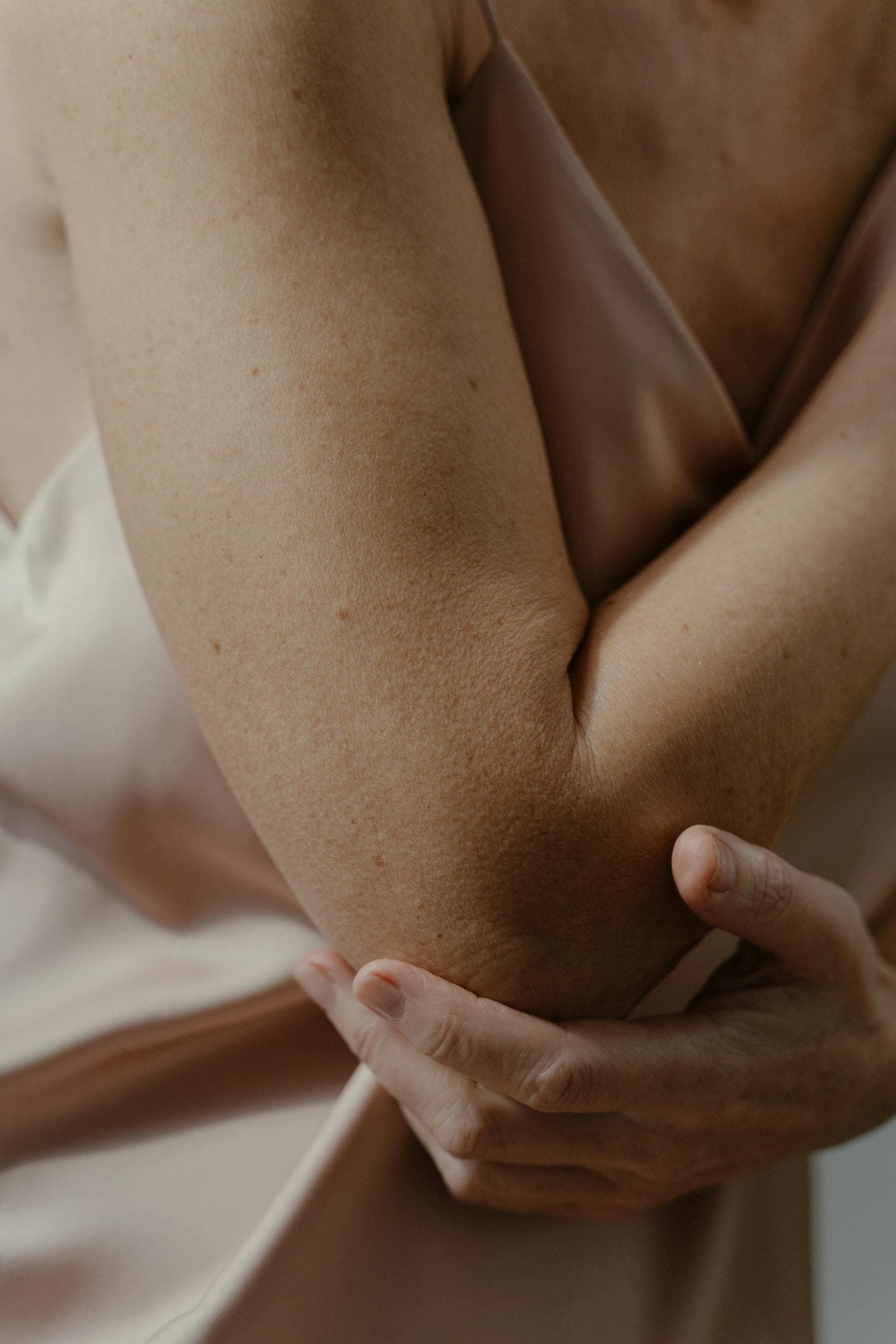
Tennis elbow is a painful condition of the tendon where the wrist and finger extensor muscles attach to the outer bony point of the elbow. Its clinical name is lateral epicondylalgia. Despite the name, most patients have never played tennis: carpenters, hairdressers, chefs, keyboard users and gardeners are the groups most often affected.
Symptoms
- Point tenderness on the outer side of the elbow, worse on pressure
- Pain on gripping: turning a door handle, lifting a kettle, shaking hands
- Pain provoked by lifting the wrist (extension)
- Grip strength reducing over time
- Morning stiffness, difficulty with the first movements of the day
Pain on the inner side is golfer's elbow (medial epicondylitis) — similar principles, different muscles.
It is not actually inflammation
The "-itis" in the name is misleading. In chronic tennis elbow the tendon shows disorganised collagen and failed healing rather than classic inflammatory cells. This has practical consequences:
- Ice and rest alone are not enough in the long run
- Painkillers reduce the symptom without addressing the tissue problem
- Controlled loading of the tendon is the core of treatment
Causes
Repeated load beyond what the tendon can tolerate:
- Repeated gripping with the wrist extended and the elbow straight
- Sudden increases in activity: pruning the whole garden in one weekend
- Equipment mismatch: a heavy racket, a grip that is too thick or too thin, poor stroke technique
- Weak shoulder and scapular control — load shifts down the arm
- Vibrating hand tools
Physiotherapy: a graded loading protocol
Eccentric exercise — the muscle working while lengthening under load — sits at the centre of treatment. It is the best documented method for stimulating tendon remodelling.
1. Settling the pain (weeks 1–2)
- Reducing rather than completely abandoning the provoking activity
- Gripping with the palm up lowers elbow load
- Hands-on techniques, and taping where useful
- Gentle wrist and finger stretching
2. Eccentric loading (weeks 3–8) — the actual treatment
Reverse wrist curl (eccentric): Rest your forearm on a table, palm down, holding a light weight (0.5–1 kg or a water bottle). Use your other hand to lift the wrist up, then lower it slowly — over three seconds — using the affected arm.
Fifteen repetitions, three sets, once a day. Increase the weight gradually every two weeks.
Pain of 3–4 out of 10 during the exercise is acceptable and expected. Pain that carries over and increases the next day means the load is too high.
3. Strength and function (weeks 8–12)
- Grip strength work
- Shoulder and scapular stabilisation — the most commonly missed cause of recurrence
- Graded return to work and sport-specific movements
- Review of technique and equipment
Do braces and taping help?
Counterforce brace: Worn 2–3 cm below the tendon attachment, it spreads load. It offers short-term relief during the painful phase. It is not the treatment and does not replace exercise.
Kinesio taping: Reduces pain perception in some patients and gives confidence in movement. The response varies; treat it as an addition to exercise.
How long does it take?
Tennis elbow requires patience. Most patients see clear improvement in 6–12 weeks and full recovery in 6–12 months. Stopping exercise at three weeks is the single most common cause of recurrence.
Corticosteroid injection
It reduces pain quickly in the short term, but performs worse than exercise-based treatment in the long run, and repeated injections can weaken the tendon. It is usually reserved for selected cases too painful to begin exercise, given once and alongside physiotherapy.
Five adjustments for daily life
- Carry heavy objects with the palm facing up
- Choose thicker grips — pens, tools, rackets
- Position the mouse so the wrist stays neutral, support the elbow
- Carry bags on the shoulder rather than in the hand
- Break up repetitive tasks every 20–30 minutes
Frequently asked questions
Will resting fix it? Complete rest reduces pain but lowers the tendon's load capacity; symptoms return when you resume activity. Controlled loading is required.
Does exercising through pain cause harm? Mild to moderate pain that settles within 24 hours is acceptable. Working entirely pain-free is not expected in tendon rehabilitation.
Why does my elbow hurt rather than my wrist? All the wrist extensor muscles converge on a single point at the outer elbow. Load generated at the wrist concentrates at that narrow attachment.
Will I need surgery? A small proportion of patients, where 6–12 months of properly delivered treatment has not worked.
This article is general information and does not replace an examination. For elbow pain, book an assessment and an individual loading programme at our clinic in Muratpaşa, Antalya.