
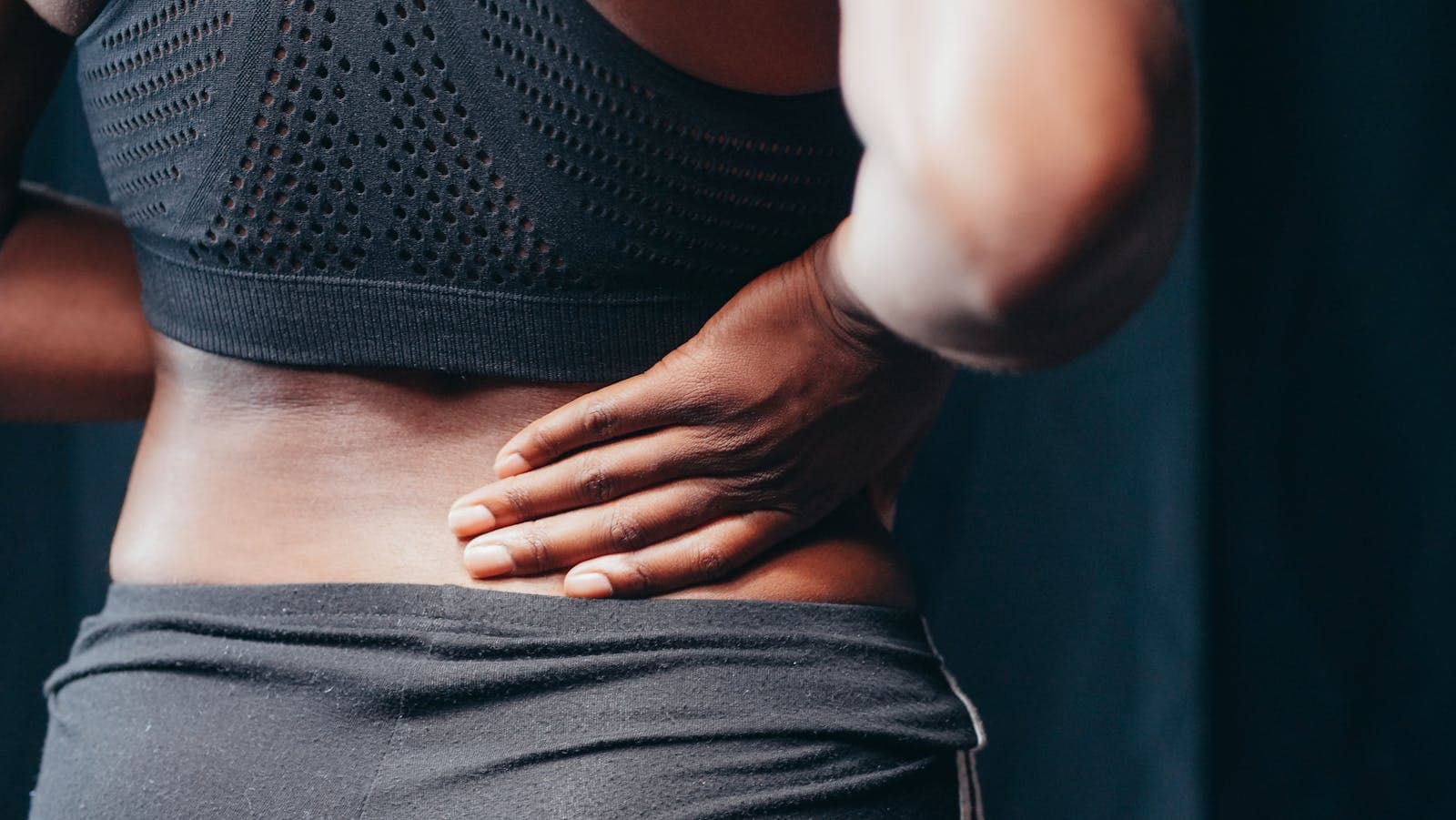
A lumbar disc herniation happens when the outer ring of a disc between two vertebrae tears and the gel-like centre pushes out, pressing on a nerve root. It is most common at L4-L5 and L5-S1. The large majority of cases recover without surgery, through physiotherapy and exercise.
Symptoms
What distinguishes a herniated disc is that the pain does not stay in the back — it travels down the leg:
- Pain from the buttock down the leg, sometimes to the foot (sciatica)
- Pain that worsens with coughing, sneezing or straining
- Numbness, pins and needles or burning in the leg
- Weakness lifting the foot, difficulty walking on tiptoe
- Symptoms that build with prolonged sitting and ease somewhat with walking
If the pain stays in the back with no leg referral, the problem is usually mechanical back pain rather than a herniation. The two are treated differently.
Which symptoms are urgent
These findings need urgent medical assessment, not physiotherapy:
- Loss of bladder or bowel control
- Numbness around the groin and saddle area (cauda equina syndrome)
- Rapidly progressing weakness in both legs
- Back pain with fever, night sweats or unexplained weight loss
- Pain that began after a serious fall or road accident
These are rare, but delay causes permanent damage.
Causes
Discs begin losing water content from around age 25. Against that background, these factors trigger the tear:
- Prolonged sitting, particularly in a slumped desk posture
- Lifting with a bent, rotating spine
- Smoking — it impairs disc nutrition
- Weak trunk and hip musculature
- Sudden, unprepared loading
What a herniation on MRI means
An important detail: disc bulges show up routinely on the scans of people with no symptoms at all, and the rate rises with age. A herniation on MRI does not on its own prove it is causing your pain.
Treatment is planned from the clinical examination, not the image. Where the pain travels, which movement provokes it, reflex and strength testing — these tell you more than the scan.
The physiotherapy pathway
Weeks 1–2: bring the pain down
Complete bed rest is not advised; more than two days of it delays recovery. In this phase:
- You learn positions that do not provoke the pain
- Direction-specific (McKenzie) exercise is prescribed; in most patients extension draws the pain out of the leg and back toward the spine, which is a good sign
- Hands-on work, and electrotherapy where useful, to reduce muscle spasm
- Short daily walks begin
Weeks 3–6: restore movement and control
- Activation of the deep trunk muscles (transversus abdominis, multifidus)
- Hip and hamstring flexibility
- Correct lifting technique: hinge at the hip, keep the back neutral
- Walking distance increased gradually
Weeks 6–12: prepare for load
- Progressive trunk stabilisation programme
- Hip and leg strengthening
- Rehearsal of the movement patterns your work and sport demand
- Building the daily routine that prevents recurrence
When surgery is needed
Surgery comes into the picture when:
- There are cauda equina signs (urgent)
- Muscle weakness is progressing
- Disabling leg pain persists after 6–12 weeks of properly delivered conservative treatment
Surgery is effective for leg pain. For patients whose problem is back pain alone, the expected benefit is limited. Rehabilitation is needed afterwards either way.
Five changes that help day to day
- The 45-minute rule: Break up sitting — stand and walk for two minutes.
- Hinge, don't bend: Squat from the knees and hips, keep the load close to your body.
- Raise your phone to eye level: A forward head and slumped upper back increase the load on the lower back too.
- Mattress: Neither very soft nor rock hard; a pillow between the knees when side-lying.
- Stop smoking: It directly affects disc nutrition.
Frequently asked questions
Will it heal on its own? Extruded disc material is often reabsorbed over time and symptoms settle. Physiotherapy manages the pain during that period and builds the muscular control that prevents recurrence.
Can I walk? Yes, as long as it does not increase your pain. Short and frequent is better than long and occasional.
Should I wear a back brace? Short-term support may help in the most painful early days. Long-term use is not advised because it weakens the trunk muscles.
Is Pilates or yoga suitable? Once the acute phase has passed, and with your physiotherapist's approval and appropriate movement selection, yes. Deep forward bending and loaded rotation are avoided.
This article is general information and does not replace an examination. If you have pain travelling into your leg, book an assessment at our clinic in Muratpaşa, Antalya.