
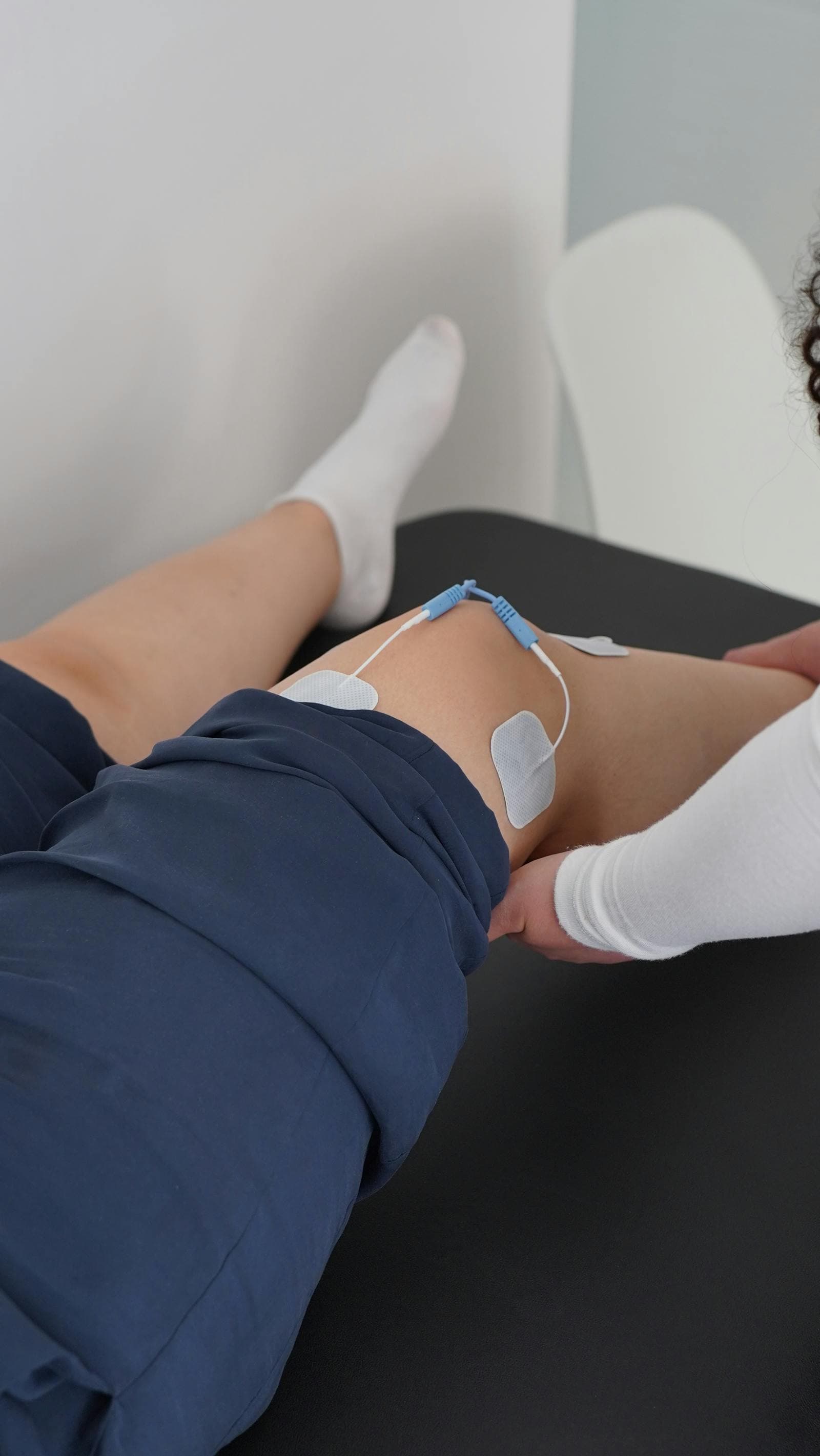
After anterior cruciate ligament (ACL) and meniscus surgery, the outcome is determined less by surgical technique than by the quality of rehabilitation. Returning early is the strongest predictor of re-injury, which is why return to sport is decided by measurable tests rather than by a date.
Meniscus: repair or resection?
This distinction changes rehabilitation from start to finish.
| Meniscal repair (sutured) | Partial meniscectomy (resected) | |
|---|---|---|
| Weight bearing | Restricted or protected for 4–6 weeks | Early, as tolerated |
| Knee flexion | Limited early (often to 90°) | Free |
| Squatting | Avoided until 12–16 weeks | Gradual, early |
| Return to sport | 4–6 months | 6–10 weeks |
Your operation note states which was done, and it must be clarified before rehabilitation begins.
ACL rehabilitation by phase
Phase 0 — before surgery (prehabilitation)
A stage that should never be skipped. Going into surgery with the swelling down, the knee fully straightening and the quadriceps working markedly improves outcomes.
- Reducing swelling, achieving full extension
- Quadriceps activation
- Normalising the walking pattern
Phase 1 — weeks 0–2: protection and control
- Full extension is the priority. Regaining lost knee straightening is far harder than regaining flexion.
- Quadriceps setting, straight leg raises
- Swelling and pain control, ice and elevation
- Partial or full weight bearing per protocol
Phase 2 — weeks 2–6: movement and basic strength
- Progressive increase in knee flexion
- Closed-chain exercise: mini squats, leg press through a limited range, step-ups
- Hip and trunk strengthening — the real mechanism that protects the knee
- Cycling (starting with low resistance)
Phase 3 — weeks 6–12: strength and single-leg control
- Single-leg squat, single-leg bridge, controlled step-downs
- Balance and proprioception work
- Brisk treadmill walking, elliptical
- Thigh circumference measurement and strength testing
Phase 4 — months 3–6: power and plyometrics
- Controlled jumping and landing mechanics — without the knee collapsing inward (valgus control)
- Hopping progressions from double to single leg
- Beginning straight-line running, if criteria are met
- Preparing for change of direction
Phase 5 — months 6–12: sport-specific and return
- Cutting, pivoting, sudden deceleration
- Sport-specific drills, graded return to team training
- Return-to-sport testing
Return-to-sport criteria
Time alone is not sufficient. Widely accepted measures:
- Limb symmetry index of 90% or more in quadriceps and hamstring strength
- Single-leg hop tests (single, triple and crossover hop) at 90% of the healthy side
- No inward knee collapse on landing
- No swelling or pain
- Psychological readiness — confidence in the knee; this item is often skipped and is associated with re-injury
Athletes returning before nine months have been shown to have a markedly higher re-injury rate, with each additional month reported to reduce risk.
The three most common mistakes
- Regaining full extension too late. A knee that does not fully straighten in the early weeks leads to a lasting gait abnormality and anterior knee pain.
- Neglecting the hip. Most ACL injuries occur as the knee collapses inward; the hip external rotators and abductors are what prevent it.
- Returning without testing. "It has been six months" is not a criterion.
Particular care after meniscal repair
- Deep squatting and rotational movements are deferred until healing is complete
- Loading the knee while bending and twisting — turning while carrying something — stresses the repair early on
- The restrictions are frustrating, but a failed repair means a second operation
Frequently asked questions
Can it heal without surgery? In selected patients, particularly those not returning to pivoting sport, structured rehabilitation gives good results. The decision weighs activity level, associated meniscal injury and knee stability.
When can I drive? Usually 4–6 weeks after right knee surgery, earlier for a left knee in an automatic. Your emergency braking response must be safe.
Why is my knee still swelling? Swelling that increases after exercise indicates the load exceeded the tissue's capacity. The programme is stepped back.
Will the muscle wasting come back? Yes, but quadriceps loss is stubborn and needs targeted strength work. Walking alone is not enough.
This article is general information and does not replace your surgeon's protocol. For a post-surgical rehabilitation programme, book an appointment at our clinic in Muratpaşa, Antalya.