
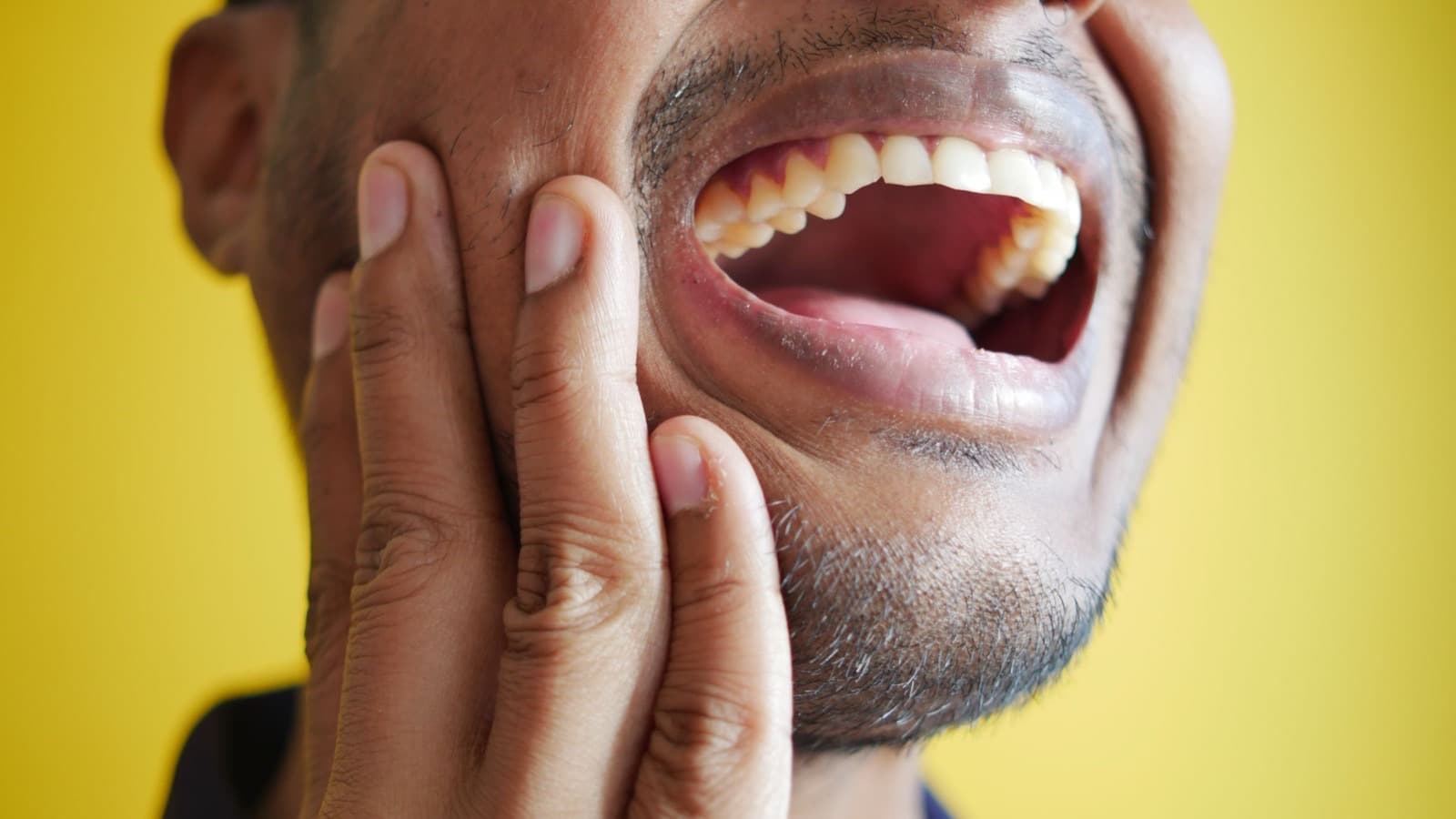
Temporomandibular joint (TMJ) disorders cause pain in the jaw and in front of the ear, clicking on opening, and difficulty opening the mouth fully, and they often stem from overloaded chewing muscles. Most cases improve without surgery through education, habit changes, exercise and manual therapy. Dentists and physiotherapists working together tend to get the best results.
What are the symptoms?
- Pain in front of the ear, in the jaw or at the temple
- Pain that increases with chewing, yawning or talking for a long time
- Clicking or grating when opening and closing the mouth
- Not being able to open fully, or the jaw swinging to one side as it opens
- Jaw fatigue and tightness in the morning
- Headache at the temples, a feeling of fullness in the ear
Clicking without pain does not need treatment on its own. Many people have a noisy jaw for years without any problem.
What causes it?
- Clenching and grinding: unnoticed during the day, or during sleep
- Stress and anxiety: increase tension in the chewing muscles
- Habits: chewing gum, nail biting, resting your chin on your hand
- Neck and posture: a forward head posture can affect the load on the jaw muscles
- Trauma: a blow to the jaw, or keeping the mouth open for a long dental procedure
Usually it is a combination of these factors rather than a single cause.
What does physiotherapy do?
| Approach | What it offers |
|---|---|
| Education | Resting the jaw, spotting the habits that trigger it |
| Manual therapy | Releasing the chewing muscles, improving joint movement |
| Jaw exercises | Controlled, straight-line opening and closing; more range of motion |
| Neck treatment | Upper neck mobility and posture work |
| Breathing and relaxation | Less muscle tension and clenching |
Your dentist decides whether you need a night guard for grinding. Physiotherapy complements that treatment.
Jaw pain often comes with headaches at the temples. We explain the different headache types in our migraine and tension headache article.
What you can do at home
- Rest position: lips closed, teeth slightly apart, the tip of your tongue resting lightly on the roof of your mouth just behind your upper front teeth. Check this position often during the day.
- Controlled opening: with your tongue on the roof of your mouth, open and close slowly in front of a mirror without letting the jaw drift sideways. 10 repetitions, a few times a day.
- Soft diet: during a flare, take a few days off hard and very chewy foods, and cut food into small pieces.
- Drop the habits: cut down on gum, nail biting and leaning your chin on your hand.
- Warmth: for muscle tension, a warm compress on the jaw muscles for 10–15 minutes can help.
- Control yawning: press your tongue to the roof of your mouth as you yawn to stop the mouth opening too wide.
How long does recovery take?
With muscle-related jaw pain, most people notice clear relief within 4–8 weeks of consistent practice. Disc problems inside the joint and long-standing pain can take 2–3 months or more. Stress and sleep directly affect how fast things improve.
When should you see a doctor?
You need a dental or medical assessment if you have:
- A jaw that suddenly locks and will not open, or stays open and will not close
- Pain, swelling or teeth that no longer meet properly after a blow to the jaw
- Facial swelling, redness, fever or toothache
- Numbness in the face, lips or tongue
- Hearing loss, discharge from the ear or dizziness
- New jaw pain that worsens with chewing, together with temple pain or visual disturbance, after the age of 50 — this needs urgent assessment
- Unexplained weight loss or increasing facial asymmetry
Frequently asked questions
Is the clicking in my jaw dangerous? Usually not, if there is no pain or restricted movement. If pain or locking comes with it, get it assessed.
If I use a night guard, do I still need physiotherapy? A night guard reduces the effect of clenching on your teeth. Physiotherapy additionally addresses muscle tension, daytime habits and restricted movement.
Could my neck pain be linked to my jaw pain? Yes. The upper neck and the jaw muscles are closely linked, so both are assessed together.
Can jaw pain feel like earache? Yes. The jaw joint sits just in front of the ear, so pain is often felt in the ear. If an ear examination is normal, the jaw is a likely source.
Does stress really affect jaw pain? Stress can increase unnoticed clenching and muscle tension. That is why relaxation techniques and sleep habits are part of treatment.
This article is for general information and does not replace an examination. If you have jaw pain or difficulty opening your mouth, you can book an assessment at our clinic in Muratpaşa, Antalya.